
Accessing ABA therapy is not always simple. Families often face long drives, limited provider options, or schedules that never seem to line up. Telehealth ABA has started to change that by removing many of those barriers and making support easier to reach.
With virtual sessions, parents can connect with qualified clinicians from home and stay involved in every step of their child’s learning. This article breaks down the key benefits and explains why telehealth ABA has become a dependable option for many households.
What Is Telehealth ABA?
Telehealth ABA means delivering Applied Behavior Analysis services through video calls and other remote technology. Instead of traveling to a clinic, you connect with a Board Certified Behavior Analyst or therapist from home.
Sessions can include direct teaching, parent coaching, progress monitoring, and data collection, all done over a secure platform.
Telehealth ABA usually works as follows:
A therapist watches or guides a caregiver while they teach a skill to the learner.
The clinician models strategies, gives feedback in real time, and updates goals based on what they see.
Sessions often use simple tools like a tablet, digital data sheets, and clear video and audio so everyone can participate.
Telehealth Expands Access to Services
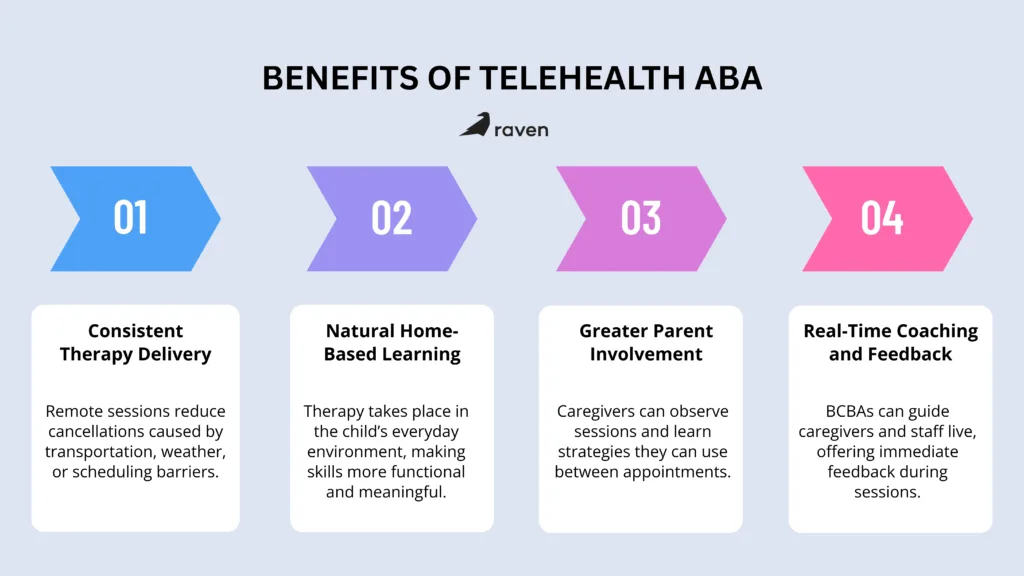
Telehealth has opened doors for families that struggled to reach clinics in person. Therapy can now come to the home, so location or travel time is no longer a roadblock. This means a family in a remote town can work with a BCBA hundreds of miles away without long drives.
Remote Regions
Telehealth bridges geographic gaps. Families in rural areas or countries with few specialists can still get ABA services.
Busy Schedules
Video sessions reduce travel time and costs. Parents save hours driving to clinics, making consistent therapy easier to maintain.
Home Setting
Therapists see the child in their everyday environment. This helps identify real-life triggers and tailor interventions on the spot.
All these factors combine to lower barriers to care. Telehealth helps the right experts reach the right children, even when in-person visits aren’t possible.
Empowering Parents Through Telehealth
Telehealth often relies on coaching parents in real time. Parents and other caregivers benefit greatly when they actively participate. Studies show that telehealth training can boost a parent’s skills and confidence.
In fact, after a telehealth intervention, parents reported feeling more empowered, less stressed, and better equipped to engage their child’s learning. This happens because remote therapy tends to place parents at the center. Rather than having the therapist do everything, parents learn by doing under guidance.
For example:
Practice Under Guidance
A BCBA on video might show parents how to prompt a skill or give a reward immediately as the child learns it. Parents then try it themselves right away. This hands-on coaching builds their confidence and skill set.
Real-Time Feedback
Caregivers receive instant feedback from the therapist while working through a daily routine like snack time or playtime. This live mentorship helps parents refine techniques on the spot.
Empowerment
By learning to reflect on situations and try new strategies, parents gain control over helping their child. Many report that understanding their child better and feeling capable reduces their stress.
Importantly, telehealth makes it easier to involve both parents or caretakers. A family doesn’t have to juggle schedules around one in-person session; everyone can hop on the call. Even divorced or separated parents can jointly participate via video.
Moreover, caregivers who emerge from telehealth programs are better trained and less anxious. They learn to incorporate ABA strategies into daily life. This parent-focused approach is well supported in the literature as an effective part of autism therapy.
Reducing Cancellations & Missed Appointments
Missing sessions can derail ABA progress. One surprising finding is that in-person programs often see many canceled or missed appointments due to illness, travel issues, or scheduling conflicts. Telehealth naturally eases this. When a session is only a click away, families rarely cancel because of a snowstorm or a minor sick day.
Flexible Scheduling: Online sessions can be rescheduled or moved to another computer-ready space within the home quickly. A backup plan like this is harder with a distant clinic.
Consistent Attendance: Many providers report fewer no-shows. In fact, clinics using telehealth often find they can accommodate more clients because they deal with fewer gaps in the schedule.
Minor Interruptions: Even if a child is slightly sick or a parent is running late, a family might still manage a shortened video session instead of skipping entirely.
Cancellations can be as high as 30% in remote ABA settings if not managed well. However, by using reminders and flexible options like shorter catch-up sessions, telehealth programs usually keep those no-shows far lower than they would be for in-person therapy alone.
When Does Telehealth Work Best in ABA?
Not every situation is perfect for a screen. Families and therapists have learned that the best results happen when certain conditions are met. In general, telehealth ABA works best when:
1. Parent/Caregiver Is Present
A session is most useful if an adult is there to help the child try the new skills. Therapists often note that when caregivers are actively involved in the session, children make the most progress.
2. Child Can Attend Briefly
Kids need enough attention span to sit with the device for a few minutes. It is recommended for children who can engage with a screen for short periods. Even if very young or low-functioning children struggle, part of the session can focus on coaching the parent on how to handle that.
3. Structured Routine
Telehealth sessions tend to work better if they are regular and predictable. Therapists schedule them just like in-person ones, and families know what to expect. Distraction-free space is key.
4. Modifying Techniques
Traditional ABA methods like prompting or discrete trials can be adapted. Research shows telehealth can effectively teach new skills across severity levels by tailoring these strategies to a virtual format.
Clinical experience during COVID-19 showed that children across the spectrum, including those with significant challenges, can learn over telehealth when the above conditions are met. Of course, very high-risk behaviors like severe elopement or medical issues might still need in-person support, but many everyday goals, communication, social routines, and reducing tantrums can be addressed remotely.
Conclusion
Telehealth has become a powerful tool for helping children with autism get the care they need. By breaking down location and scheduling barriers, it expands access to autism experts. It also puts parents right in the action, building their skills and confidence while reducing stress.
And because sessions happen from home, families find it easier to stick to the plan; fewer missed appointments or long commutes. When used in the right way; with engaged caregivers and a structured routine, telehealth ABA can be just as effective as in-person programs.