
Published on
When a child gets an autism diagnosis, parents quickly start looking for the best support. Applied Behavior Analysis therapy is the most recommended treatment, but it is also a big financial commitment. Many families worry about how they will afford the hours of therapy their child needs to succeed.
Understanding the costs, what insurance covers, and how clinics charge can help you plan your finances and get the right care for your child without panicking. In this article, you will explore the complete breakdown of how much ABA therapy costs.
What Factors Influence the Cost of ABA Therapy?
Not every ABA program costs the same amount. The price changes based on a few clear factors that clinics use to set their rates.
1. Therapist Experience and Credentials
Who is working with your child changes the price. A Board Certified Behavior Analyst (BCBA) has a master’s degree and charges more for their time. A Registered Behavior Technician (RBT) works directly with the child under the BCBA’s watch and costs less.
2. Where Therapy Happens
Going to a clinic or center usually costs more than at-home therapy. Clinics have to pay for rent, electricity, and expensive learning toys. Home-based therapy skips these extra bills, though therapists do have to charge for travel time.
3. Where You Live
Just like rent and groceries cost more in big cities, ABA therapy does too. Clinics in busy urban areas have higher costs to stay open, which means higher hourly rates for families.
Average Cost of ABA Therapy Services
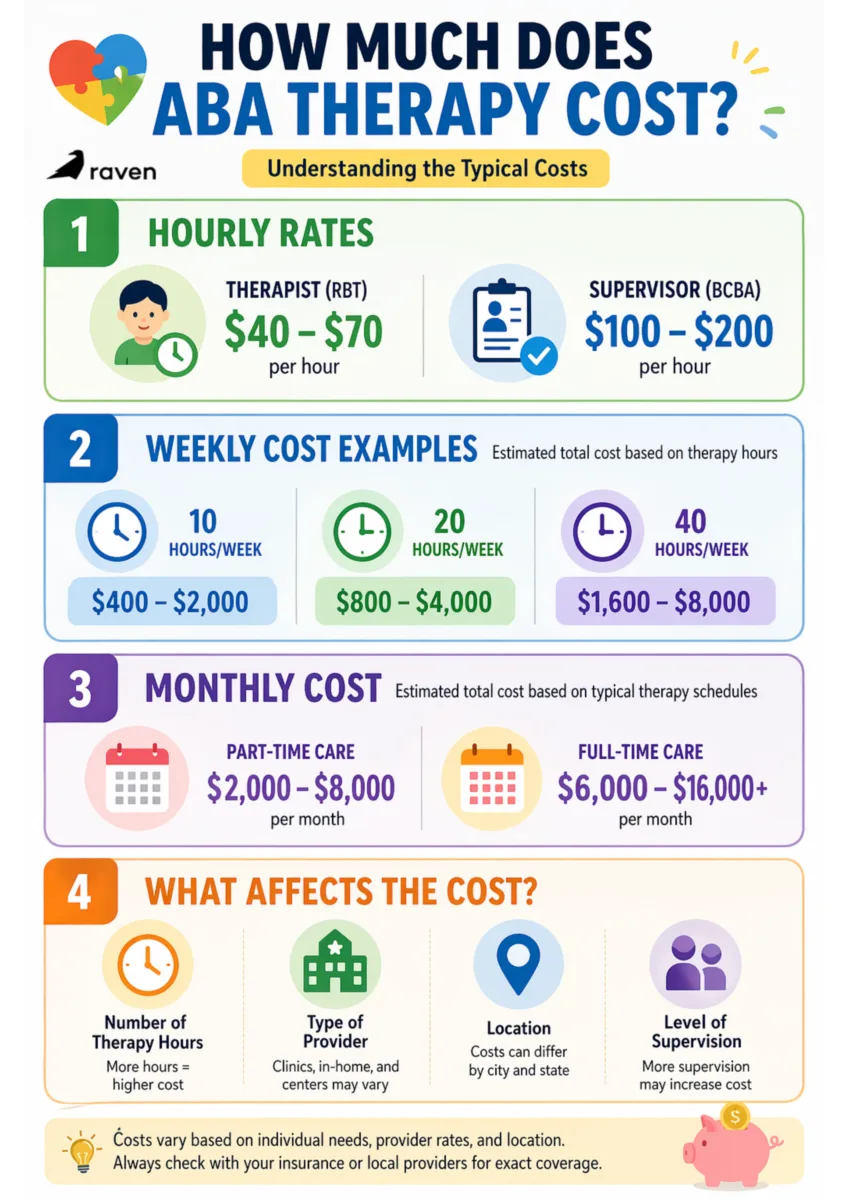
If you are paying out of your own pocket, the total bill can look very high. Most children need between 10 and 40 hours of therapy every single week for it to work well.
Hourly Rates: The average cost for one hour of direct ABA therapy is between $120 and $150. If a highly experienced BCBA is doing the session, it can jump to $200 an hour.
- Weekly Costs: For a child getting 20 hours of therapy a week, the cost is roughly $2,400 to $4,500.
- Annual Costs: If a child does intensive therapy year-round without insurance, the total yearly cost can range anywhere from $62,400 to over $249,600.
- Upfront Fees: Before starting, clinics charge for an initial assessment to create a customized treatment plan. This usually costs a flat fee of $500 to $2,000.
Insurance Coverage and What It Includes
The good news is that most families never pay those huge out-of-pocket numbers. All 50 states and Washington, D.C., have laws that require health insurance companies to cover ABA therapy for autism.
When you use private health insurance, you usually only have to pay your normal copay or your deductible. Many families only pay between $0 and $50 per session once their deductible is met. However, every state has different rules. Some states have a dollar limit on how much they will pay per year, while others have no limits at all.
Insurance usually covers the first assessment, the hours the RBT spends with your child, and the time the BCBA spends supervising. To get this coverage, the therapy must be marked as “medically necessary” by a doctor, and you usually have to wait a few weeks for the insurance company to approve it before you can start.
Medicaid vs Private Pay Options
When looking at payment options, families mostly choose between using Medicaid or paying privately. Both of these options have different benefits and challenges.
Medicaid Coverage
Medicaid is required by federal law to cover medically necessary ABA therapy for children under 21. For families who qualify, this is the cheapest option. Medicaid usually covers the entire cost of the therapy with zero copays or deductibles.
Even if a family makes too much money for standard Medicaid, children with autism often qualify for state Medicaid waiver programs based on their disability.
Private Pay Flexibility
Private pay means you hand cash directly to the clinic without using insurance. This is very expensive, but it offers total freedom. You do not have to wait for an insurance company to approve the hours, so therapy can start the very next day.
You also get to decide exactly how many hours your child gets without an insurance company saying no. Some families use a mix of both: they use insurance for the basic hours and pay cash for extra weekend sessions or parent training.
Conclusion
Figuring out how to pay for ABA therapy can feel overwhelming at first. The hourly rates look scary, but thanks to strong state laws and Medicaid programs, help is out there. Take the time to call your insurance company and ask exactly what your plan covers.
You can also talk to local clinics about their private pay options or waitlists. Getting the financial part sorted out early lets you focus on what really matters: watching your child learn, grow, and thrive.
Sources:
https://unitedcareaba.com/how-much-does-aba-therapy-cost/
https://www.connectncareaba.com/blog/aba-therapy-cost-in-north-carolina
https://unitedcareaba.com/how-much-does-aba-therapy-cost/
https://abcachieve.com/insurance-vs-private-pay-for-aba/
https://www.appliedbehavioranalysisedu.org/state-by-state-guide-to-autism-insurance-laws/
https://www.magnetaba.com/blog/aba-therapy-costs-and-insurance-coverage
https://www.cubetherapybilling.com/private-pay-vs-insurance-in-aba-which-pays-more-and-works-best