
Published on

In the world of Applied Behavior Analysis (ABA), timing is just as crucial as the behavior itself. While it is easy to focus only on whether an individual can complete a specific task, how long it takes them actually to start that task often tells a much deeper story.
This is where latency recording comes into play. By simply measuring the exact pause between an instruction and a response, therapists and educators can uncover hidden barriers to learning, fine-tune their support strategies, and help individuals build faster, more confident habits.
What is latency recording in ABA?
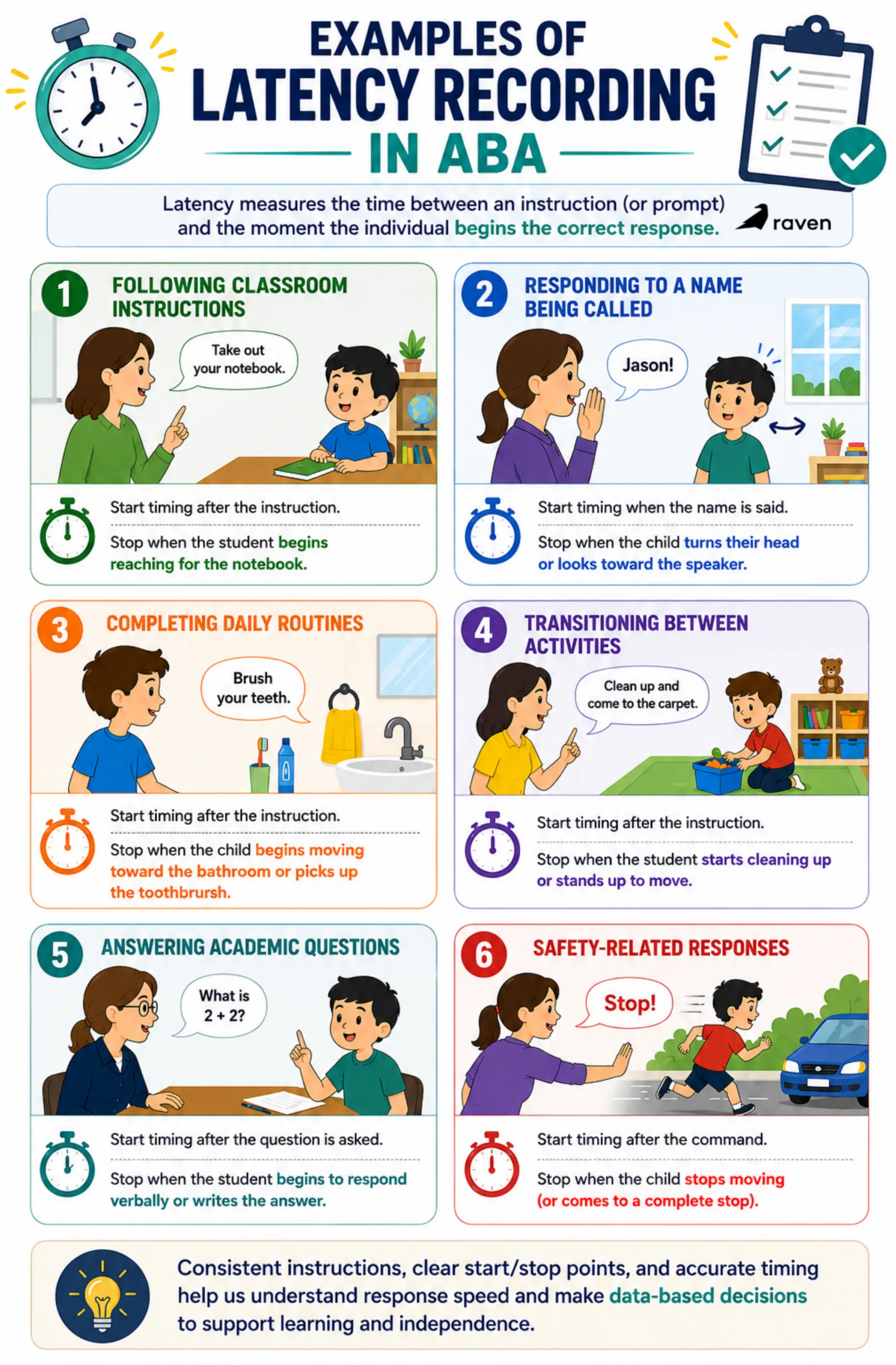
Latency recording in Applied Behavior Analysis (ABA) is a simple way to measure the exact time between a prompt and the moment a person responds. Think of it as timing the hesitation before an action begins.
For example, if a teacher says “Open your math book,” the latency is the number of seconds it takes for the student to reach for and open it. This tracking method is very helpful for figuring out how quickly someone processes directions.
It also sheds light on their focus levels and readiness to learn. By looking closely at these time delays, therapists can figure out if a slow response is caused by simple confusion, a lack of interest, or if the student just needs more practice to get comfortable with the task.
When to use latency recording vs. other measurement types
Choosing the best way to collect data depends on the specific habit or skill you want to study. Latency recording is quite different from other everyday methods, like duration or frequency tracking.
You should pick latency when your main goal is to see how fast a person starts an activity after they are asked. It is a great fit for tracking things like following daily routines or responding to classroom rules. On the other hand, you use duration recording when you need to find out how long an event lasts from beginning to end.
This is used for measuring things like the total length of a tantrum or how long a child stays seated at dinner. Frequency recording is best when you just want to count how many times an action happens, like raising a hand. Latency is special because it focuses only on the starting line.
How to collect latency data accurately in a session
To obtain high-quality information, you have to record latency data carefully during a therapy session. The very first thing to do is make sure everyone knows exactly what the target action looks like. Once the session is going, here is how you can collect the data well:
- Have a stopwatch or your timer ready before you give any instructions.
- Say the instruction clearly and directly to the person.
- Start your timer the exact second you finish speaking the prompt.
- Stop the timer the exact second the person begins the right action.
- Write down the exact number of seconds or minutes that went by.
- Find the average latency at the end of the day to see the bigger picture.
It is also super helpful to keep notes on what is going on in the room. Writing down if the room was loud or if the child seemed tired can help explain why a response took longer on a specific day.
Common mistakes when recording latency
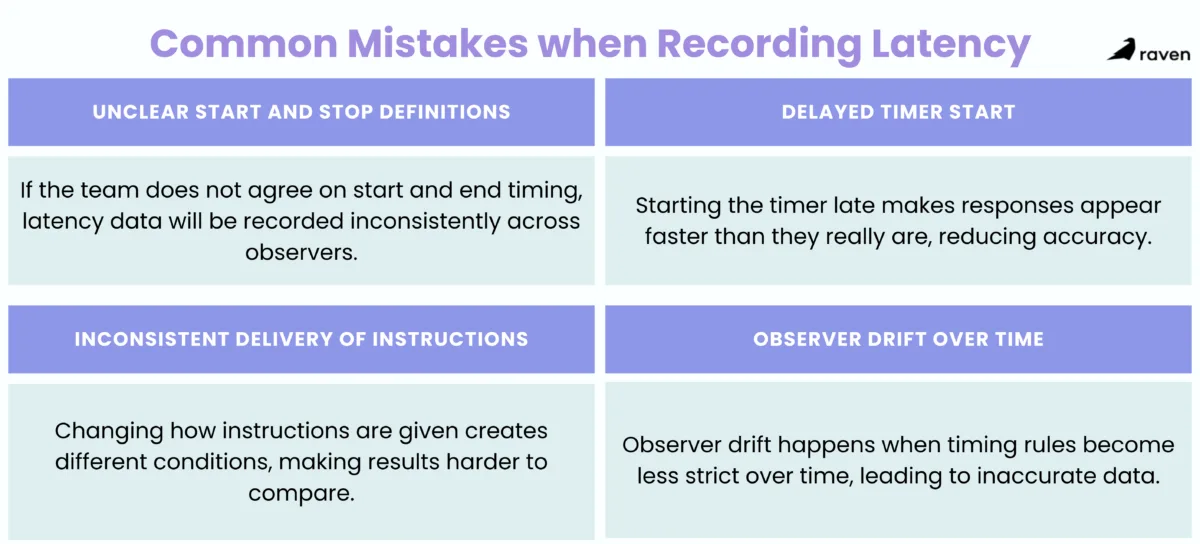
Even experienced behavior therapists can run into snags when tracking latency. Because this method relies on exact timing, tiny errors can mess up the final results. Here is a detailed look at the most common slip-ups people make and why they cause problems:
Not defining the exact start and stop moments
This is the biggest trap. If one therapist thinks “touching the math book” is the end of the wait time, but another therapist waits until the student “opens the book to page five,” their numbers will never match. Everyone on the team needs a crystal-clear, agreed-upon rule for exactly what action stops the clock.
Starting the timer too late
The clock needs to start the exact second the instruction leaves your mouth. Fumbling with a stopwatch, looking at your phone, or getting distracted for even two seconds makes the data completely useless. When this delay happens repeatedly, the data will falsely show that the person is responding much faster than they actually are.
Changing how the instruction is given
If you say, “Please go brush your teeth right now” on Monday, but on Tuesday, you simply point toward the bathroom door, you are not measuring the same thing. The direction, often called the prompt, needs to be delivered the exact same way every single time so the timing stays fair and accurate.
Getting sloppy over time (observer drift)
Even if everyone starts following the rules perfectly, people naturally get a little relaxed over weeks or months. A therapist might unintentionally stop the clock just a little bit too early. This is why having two people track the exact same event at the exact same time every once in a while is a big deal; it proves that everyone is still strictly following the original rules.
Forgetting to write down the context
Just writing down a number does not tell the whole story. If a child takes five minutes to answer instead of their usual ten seconds, but you forget to write down that they had a fever or there was loud construction outside, the data makes it look like the child is just losing their skills. Always write down environmental clues like noise, illness, or changes in routine.
How do digital tools make latency recording faster and more reliable?
While using paper sheets and a regular stopwatch gets the job done, modern tech has made data collection much less of a headache. A lot of clinics are dumping paper and switching to digital apps to track behavior.
These tools usually have built-in timers, so a therapist can just tap a screen to start and stop the clock without juggling a clipboard and a phone. This really cuts down on clumsy mistakes and makes the whole tracking process feel smoother.
Also, digital platforms take the raw numbers and turn them into graphs instantly. Because the software handles the math and chart-making, therapists can spend less time staring at paperwork and spend more time looking at the person they are helping.
Conclusion
Latency recording is truly a helpful tool in the ABA field for finding the gap between a direction and an action. By measuring this pause the right way, therapists can spot hidden hurdles with attention, motivation, or processing speed that might go unnoticed otherwise.
Whether you track the numbers with a basic stopwatch or a fancy digital app, the secret to success is setting clear rules and keeping the timing strict. Tracking latency helps professionals build better support plans so individuals can learn to respond with more speed and confidence in their everyday lives.
Source:
https://actifyaba.com/latency-recording-in-aba/
https://myabakis.com/effective-aba-data-collection-techniques-for-aba-therapists/
https://arbss.org/wp-content/uploads/2022/09/Latency-Data-Sheet_.docx-1.pdf
https://nurturingnests.com/aba-measurement-systems/