
Starting a new Applied Behavior Analysis (ABA) clinic is an exciting journey, but it comes with real financial stress. You can have a waiting list full of clients and still struggle to pay your therapists if your money is tied up in the billing process.
Cash flow is simply the money moving in and out of your business. If more money is going out than coming in, your doors will close, no matter how great your therapy is. In this article, you will explore cash flow tips for your new ABA clinic to keep your finances healthy.
Why Cash Flow Matters for ABA Clinics
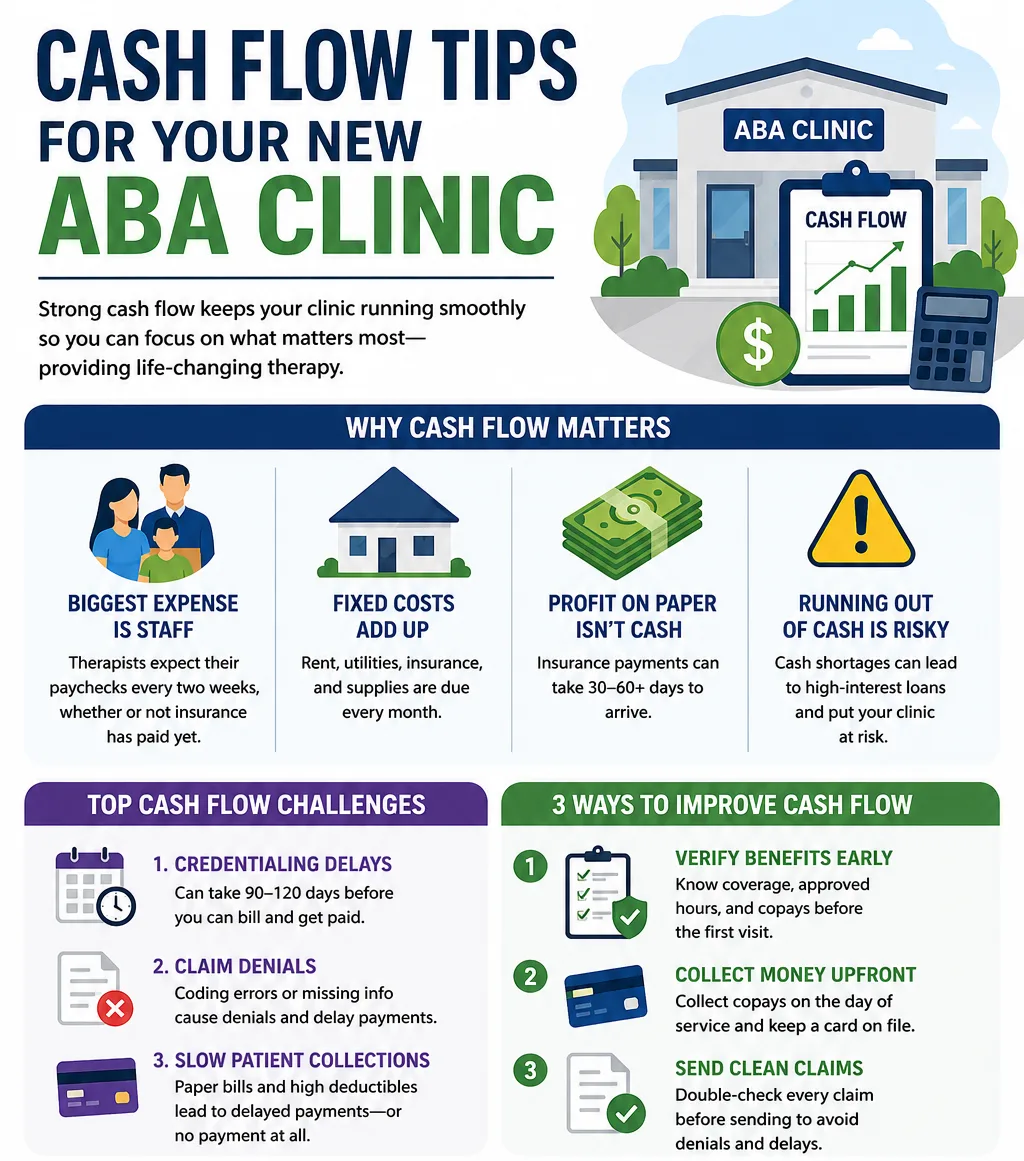
ABA therapy is a highly service-based business. Your absolute biggest expense is your staff. Board Certified Behavior Analysts (BCBAs) and Registered Behavior Technicians (RBTs) expect their paychecks every two weeks, regardless of whether an insurance company has actually paid them yet.
Besides payroll, you’ll likely have fixed monthly costs like clinic rent, lights, liability insurance, and therapy supplies. Cash flow matters because profit on a piece of paper does not pay the bills; actual cash in your bank account does.
You might bill $50,000 in a month, but if insurance takes 45 days to send the check, you have zero cash to pay your rent today. If you run out of cash while waiting for insurance payouts, you might be forced to take out high-interest loans just to keep the lights on.
Common Cash Flow Challenges in New Clinics
New medical practices face a unique set of hurdles when trying to keep their bank accounts healthy. Understanding these roadblocks is the first step to fixing them.
1. Credentialing Delays
Before you can bill an insurance company, your clinic and your individual therapists must be credentialed. This slow process can take anywhere from 90 to 120 days. If you start seeing patients before this is fully done, you will wait months to get paid.
2. Claim Denials
ABA billing codes are very strict. A simple mistake, like using the wrong time modifier or billing for hours that were not approved, will cause the insurance company to deny the claim. Denials instantly stop your cash flow and require hours of phone calls to fix.
3. Slow Patient Collections
Families often have copays or high deductibles. If you send a paper bill in the mail weeks after a therapy session, it usually takes months to collect that money, if you get it at all.
Ways to Manage and Improve Cash Flow
To protect your clinic’s financial health, you need to set up strict rules from day one. Do not treat billing as something you only think about at the end of the month.
1. Verify Benefits Early
Before a child even walks in for their first assessment, call their insurance company. Know exactly what their plan covers, how many hours are allowed, and what their copay will be. Surprises lead to unpaid bills.
2. Collect Money Upfront
Stop sending paper bills. Have families keep a credit card on file and collect their copays on the exact day of the service. This guarantees you get the patient’s portion of the payment immediately.
3. Send Clean Claims
Make sure your billing team double-checks every single claim before sending it. Fixing a typo before it goes to the insurance company takes five minutes. Fixing a denial takes weeks of waiting.
Tools to Help Track and Manage Cash Flow
You cannot manage what you do not track. Relying on basic spreadsheets will cause you to lose track of claims and lose money. You need technology built specifically for medical billing.
Practice Management (PM) Software
Use an ABA-specific system. These tools track appointments, therapist hours, billing, and more, all in one place. Most importantly, they can warn you if an insurance authorization is about to expire, stopping you from providing free, unbillable therapy.
Clearinghouses
A clearinghouse acts as a digital middleman between your clinic and the insurance company. It scrubs your claims for coding errors before they are submitted, reducing your denial rate and speeding up your payments.
Conclusion
Managing cash flow is not the most fun part of running an ABA clinic, but it is the most vital. By understanding common billing traps, collecting copays upfront, and investing in the right tracking software, you can avoid the panic of missing a payroll run.
When your money is managed well, you remove the stress of keeping the doors open. This allows you to focus all your energy on what truly matters: providing life-changing therapy to the children and families who need you most.
Sources:
https://www.mgma.com/financial-management-2
https://www.mgma.com/online-courses/cash-flow-accounts-payable-and-payroll-management-certificate
https://practolytics.com/blog/impact-of-poor-credentialing-on-provider-revenue/
https://medicalnewsbulletin.com/how-credentialing-impacts-your-cash-flow/
https://ensorahealth.com/blog/aba-billing-cheat-sheet-best-practices-2/
https://www.portiapro.com/blog/aba-billing/
https://swiftcarebilling.com/professional-aba-billing-services-improve-cash-flow/