
Launching a successful ABA practice requires a tremendous amount of effort. You spend months finding the right staff, setting up your space, and meeting with families. But once you start seeing patients, you face a completely different problem: getting paid.
Dealing with health insurance companies is confusing, and it takes up a lot of time. One of the biggest choices you will make as a new clinic owner is how to handle your billing.
Should you hire someone to sit in your office and do the work, or should you pay an outsourced company to handle it for you? Both options have good and bad points when it comes to cost, control, and getting things done fast. Let’s dive into how they compare and what works best, especially for brand-new clinics.
Pros and Cons of In-House Billing
Doing your billing in-house means you hire your own experienced employee to handle all your session claims, payments, and insurance calls right from your ABA clinic.
Pros of In-House Billing
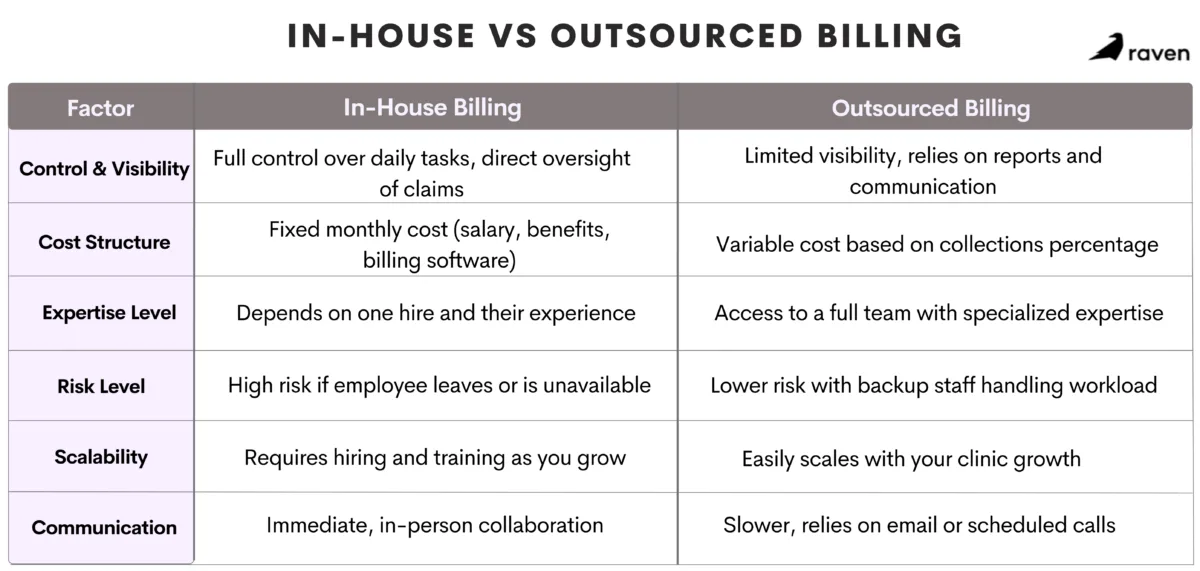
Total Control: You can walk down the hall and ask your biller a question at any time. You know exactly what they are working on and how many claims they have sent out that day.
Direct Talk: If an ABA therapist makes a mistake on a session note, your biller can talk to them right away to fix it before sending the claim to the insurance company.
Full Focus: Your biller works only for you. They are not splitting their time and attention with ten other clinics.
Cons of In-House Billing
High Start-Up Costs: You have to pay a steady salary, health benefits, and payroll taxes. You also have to purchase billing software and a computer for them to use.
Staff Risk: If your one biller gets sick, goes on a long vacation, or quits suddenly, your cash flow stops completely until you find and train someone new.
Training Needs: ABA billing rules change all the time. You have to pay for your staff to keep taking classes so they do not make costly mistakes.
Pros and Cons of Outsourced (Managed) Billing
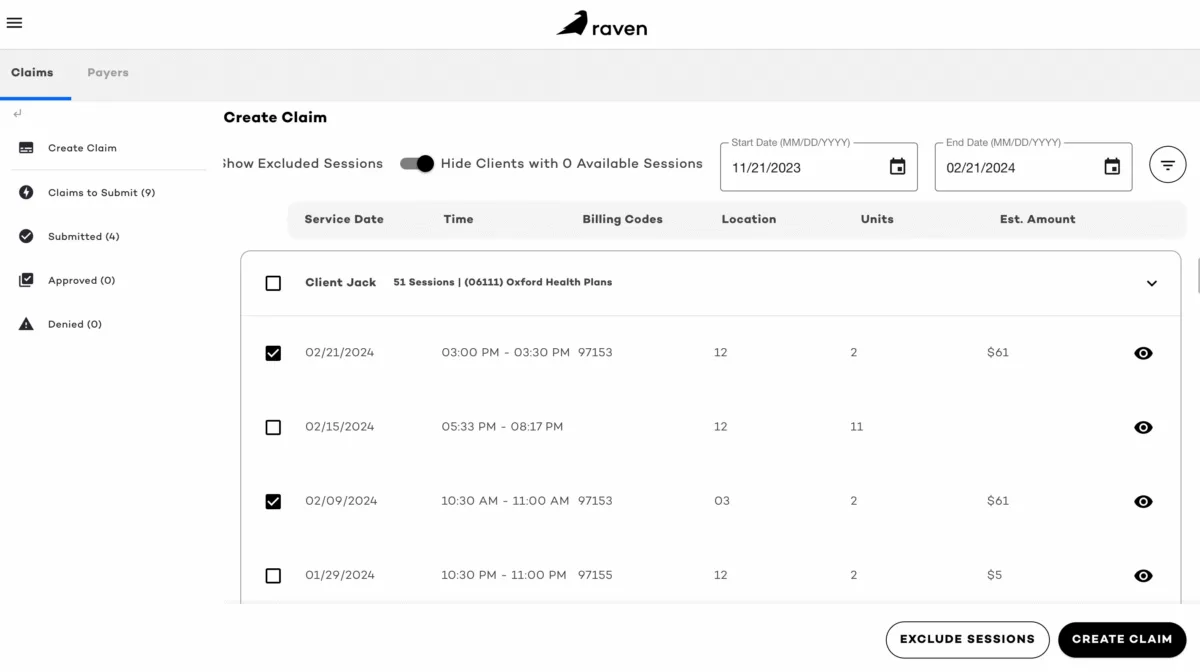
Outsourcing means you hire a third-party billing company to manage your claims. Your daily session data is sent over, and they do the rest of the work remotely.
Pros of Outsourced Billing
Built-in Experts: good billing companies already know ABA codes perfectly and use advanced billing software to streamline claims. They know exactly how to fight insurance denials because they do it all day, every day.
No Staff Headaches: You do not have to worry about sick days, hiring, or firing. If someone at the billing company calls out sick, another worker simply takes over your account so your claims keep moving.
Pay for Results: The majority of outside billers charge a small percentage of the money they actually collect. If your clinic does not get paid, the billing company does not get paid.
Cons of Outsourced Billing
Less Direct Control: You cannot just walk over to their desk. You have to wait for an email reply or hop on a phone call to get updates on your claims.
Data Sharing Rules: You are handing over sensitive patient information to an outside group. You have to trust and ensure they follow all privacy rules very strictly.
Cost Comparison and ROI Considerations
When you look at the cost, you have to do some basic math to see your return on investment (ROI).
If you hire an in-house biller, you’ll be paying a full-time salary. In many places, an experienced medical biller costs between $45,000 and $60,000 a year. Then you add in the cost of software fees and benefits. That is a high, fixed cost you have to pay every month, even if your clinic is experiencing a slow month with very few clients
If you use an outsourced company to manage your billing, they usually charge between 4% and 8% of the total money they collect for you. If your new clinic is small and only making $10,000 a month at the start, paying 6% is only $600 a month. And as your clinic grows, so does the expertise and capacity your billing partner brings, meaning more claims handled accurately, fewer denials, and faster reimbursements that offset the cost.
Which Option Is Best for New Clinics?
For a brand-new ABA clinic, cash flow is usually very tight. You might only have a few clients in your first few months. Because of this, outsourced billing is almost always the better choice for beginners.
When you outsource, you do not have to commit to a large salary before you even have steady money coming in. You also get instant access to experts who know exactly how to handle tricky ABA insurance codes.
New owners often make a lot of mistakes with insurance rules. Having a team of experts handle this stops early claim denials from freezing your cash flow. Once your clinic is open for a few years and making a steady, high income, you can always change your mind and move your billing in-house.
Conclusion
Deciding how to handle your billing is a major step in running a successful ABA clinic. Having a person in your office gives you great control and easy communication, but it costs a lot of money upfront and carries big risks if that person ever leaves.
Using an outside billing company saves money early on and brings in instant experts. For most new clinics, outsourcing is the safest way to ensure claims are paid fast while keeping costs low.
As your business grows and your income goes up, you can always review your numbers and consider building an in-house team later.
Sources:
cms.gov/medicare/coding-billing/electronic-billing
hhs.gov/hipaa/for-professionals/covered-entities/sample-business-associate-agreement-provisions/index.html
hfma.org/reference/revenue-cycle-management/