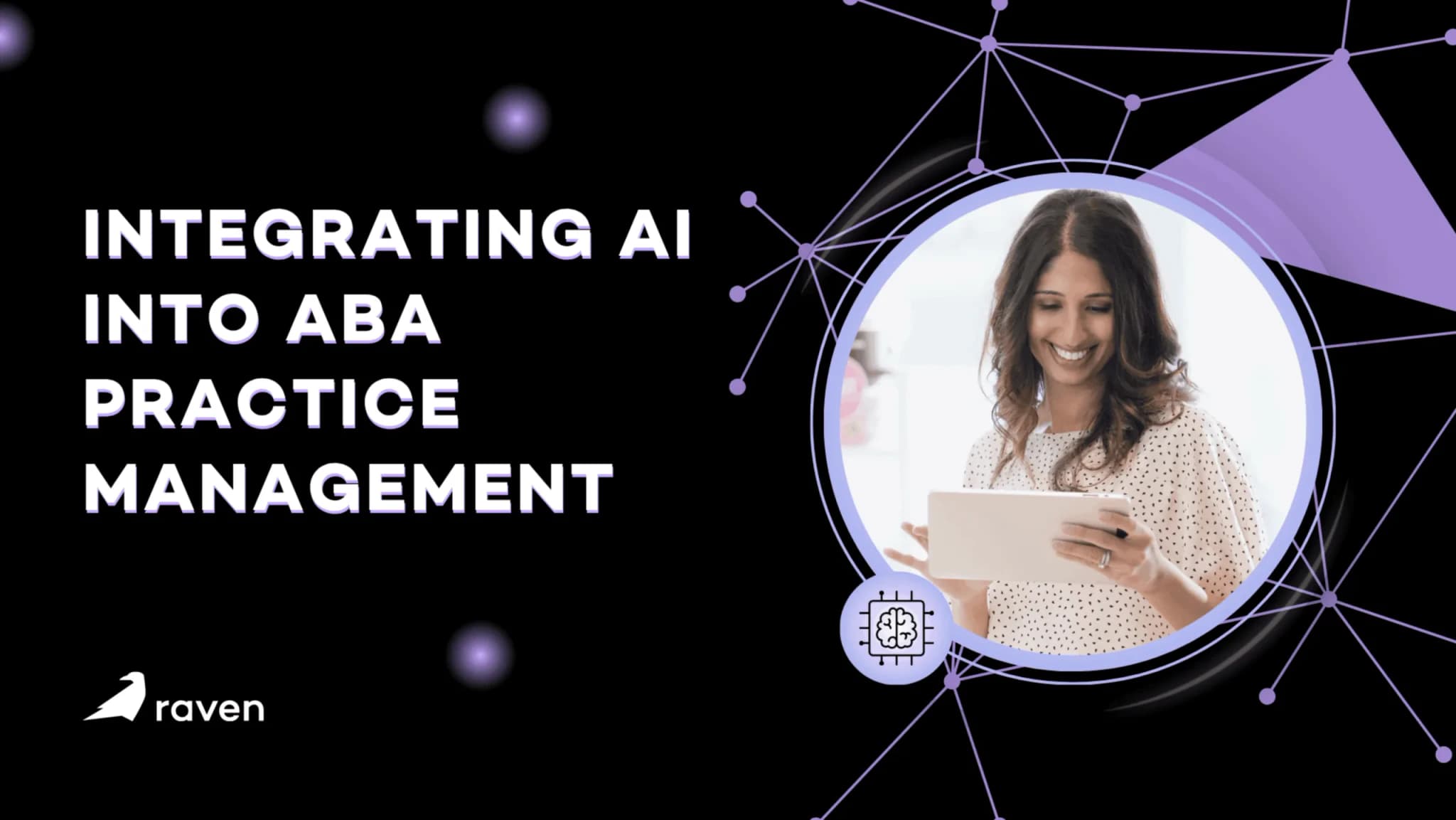
Artificial intelligence (AI) is changing how ABA clinics run day to day. In practice management, AI tools can speed up routine tasks like writing session notes, spotting patterns in behavior data, scheduling appointments , and producing clear reports. That frees clinicians to spend more time on treatment and supervision, while making operations smoother and more predictable.
In this article, you will explore the real ways AI is already helping ABA providers, the important safeguards clinics must keep in place, and a practical view of where AI can add value and what to watch for when bringing these tools into your practice.
How AI Helps ABA Practices?
AI is not a replacement for therapists. It’s a set of tools that automates repetitive work and highlights signals humans should act on. Key areas where AI adds value are as follows:
1. Automatic Transcription
AI can transcribe session audio into text so clinicians spend less time typing notes. Some clinics use AI tools for ABA that automatically link these transcripts to client profiles, reducing manual uploads and improving data consistency.
2. Drafting Structured Notes
After a session, AI can propose a draft progress note or a summary of target behaviors, leaving the clinician to edit and sign. That cuts paperwork time while keeping the clinician in control of clinical content.
3. Pattern Spotting
AI can scan months of session data and flag trends such as rises or drops in specific behaviors that might be hard to see by hand. This supports faster clinical decisions.
4. Predictive Signals
Models can suggest which clients may respond to a given strategy or when a behavior is likely to escalate, helping teams plan proactively. Use these signals as prompts for human review, not final decisions.
5. Smart Scheduling
AI tools predict demand, suggest optimal appointment times, and automatically offer slots to families, reducing back-and-forth scheduling. Some systems report meaningful drops in no-shows and better daily workflows.
6. Reminders and Triage
Automated reminders, pre-visit checklists, and conversational bots can handle routine communications so staff can focus on care.
7. Cleaner Datasets
AI helps standardize and clean raw data so reports show consistent fields and units. That reduces errors that creep into manual data entry.
8. Faster Reports
Generate visual progress charts and exportable summaries for insurance, supervision, or team meetings with much less manual work.
Important Considerations Before Adopting AI
AI has upside, but clinics must be deliberate. Here are the core concerns and how to address them.
Privacy and HIPAA Compliance
Any AI that accesses protected health information (PHI) must be treated under HIPAA rules. That means encryption, strict access controls, BAAs (Business Associate Agreements), and careful logging of who saw what. Do not assume a vendor’s marketing line is compliance; verify contracts and technical measures.
Ethics and Bias
AI models can reflect the biases in their training data. That can skew predictions about which clients may succeed or fail with a strategy. Vet models for fairness and test them on your own data before relying on outputs.
Transparency and Explainability
Prefer tools that show how they reach recommendations (features they used, confidence levels). If a system makes a surprising call, like flagging a client for urgent review, clinicians must be able to inspect why. Opaque “black box” decisions are risky in clinical care.
Human Judgment Remains Essential
AI as support, not authority: Use AI outputs to focus clinician attention. Final clinical decisions, treatment planning, and ethical judgments must rest with trained humans. AI can speed up work - never replace clinical reasoning.
Practical Rollout Checklist for Clinics
Before you switch on an AI feature, run through this list:
Define the use case. Start with one problem: note automation, schedule optimization, or a data-flagging dashboard.
Vendor vetting. Ask for security docs, SOC 2 or similar attestations, HIPAA compliance proof, and whether the vendor signs a BAA.
Data governance. Decide what data will be shared, how long it’s kept, who can access it, and how to remove it if needed.
Bias and testing. Test the tool on historical, de-identified clinic data. Check for strange or biased outputs.
Explainability requirement. Prefer tools that provide rationale or confidence scores with each recommendation.
User training. Teach staff how to interpret AI outputs and how to spot errors. Include clear escalation routes.
Consent and transparency. Let families know what AI tools the clinic uses and how data is protected. Obtain any consent required by policy.
Monitor and review. Set metrics for success (time saved, decreased no-shows, report accuracy) and review outcomes regularly.
Risks to Watch and How to Reduce Them
Over-reliance– Never let AI outputs override clinical checks. Always require a clinician’s sign-off.
Data leaks- Limit exported data and apply strict identity access controls. Log accesses and run audits.
Model drift- AI models can degrade as clinic populations change. Retrain or revalidate models periodically.
Regulatory change– Keep legal counsel involved because the rules for AI in healthcare are evolving fast. Stay current with guidance from regulators and trusted health IT sources.
Final Thoughts
AI can make ABA practice management faster and clearer. It reduces routine paperwork, surfaces meaningful patterns, and helps clinics use staff time where it matters most. At the same time, privacy protections, ethical safeguards, and human oversight are non-negotiable. Start small, test thoroughly, and keep clinicians at the center of every workflow change. That combination of smart tools and human judgment offers the best path to safer, more efficient ABA services.