
Modern Applied Behavior Analysis (ABA) works best when therapy is something done with a child rather than something done to a child. At the heart of this shift is a simple but powerful idea called assent.
Respecting a learner's willingness to take part in their own sessions changes the entire feel of therapy. Instead of relying on strict compliance or pushing a child through distress, assent-based care builds trust, lowers anxiety, and treats every learner as an active partner in their own growth.
When children know their boundaries will be respected, they feel safe. And a child who feels safe is far more ready to learn, explore, and connect.
What Does Assent Mean in ABA Therapy?
In simple terms, assent means a learner's clear, willing agreement to participate in an activity, teaching step, or therapy session. Even when a child is too young or legally unable to sign formal medical paperwork, they still have preferences, feelings, and a voice that deserves to be heard.
Assent is how a therapist checks in to make sure the child is on board with what is happening. A crucial detail about assent is that it is never a one-time checkbox at the start of a session.
Assent is continuous and can change from minute to minute. A child might happily join a tabletop matching game at ten o'clock, lose interest ten minutes later, and decide they need a break. In an assent-based practice, that shift is respected rather than treated as defiance.
Why Is Assent Important in ABA Therapy?
Prioritizing assent matters for both ethical and practical reasons.
Better Learning Outcomes
Stress blocks learning. When a child is forced to stay in an uncomfortable activity, their brain focuses on escaping the stress rather than picking up new skills. Willing participation leads to stronger focus and faster progress.
Stronger Therapeutic Relationships
Children build real rapport with therapists who listen to them. Trust makes sessions smoother and reduces the likelihood of frustration-driven behaviors.
Lifelong Self-Advocacy
Teaching neurodivergent children that their "no" matters helps them build healthy personal boundaries. Knowing they can safely speak up or step back protects their dignity both inside and outside the clinic.
Ethical Responsibility
Professional guidelines from the Behavior Analyst Certification Board (BACB) emphasize protecting client dignity, safety, and well-being. Seeking assent ensures therapy stays compassionate and centered on the learner's quality of life.
Assent vs. Consent: What's the Difference?
Parents and new staff often confuse consent with assent because both involve agreeing to therapy. While the two concepts work side by side, they serve very different roles in clinical care.
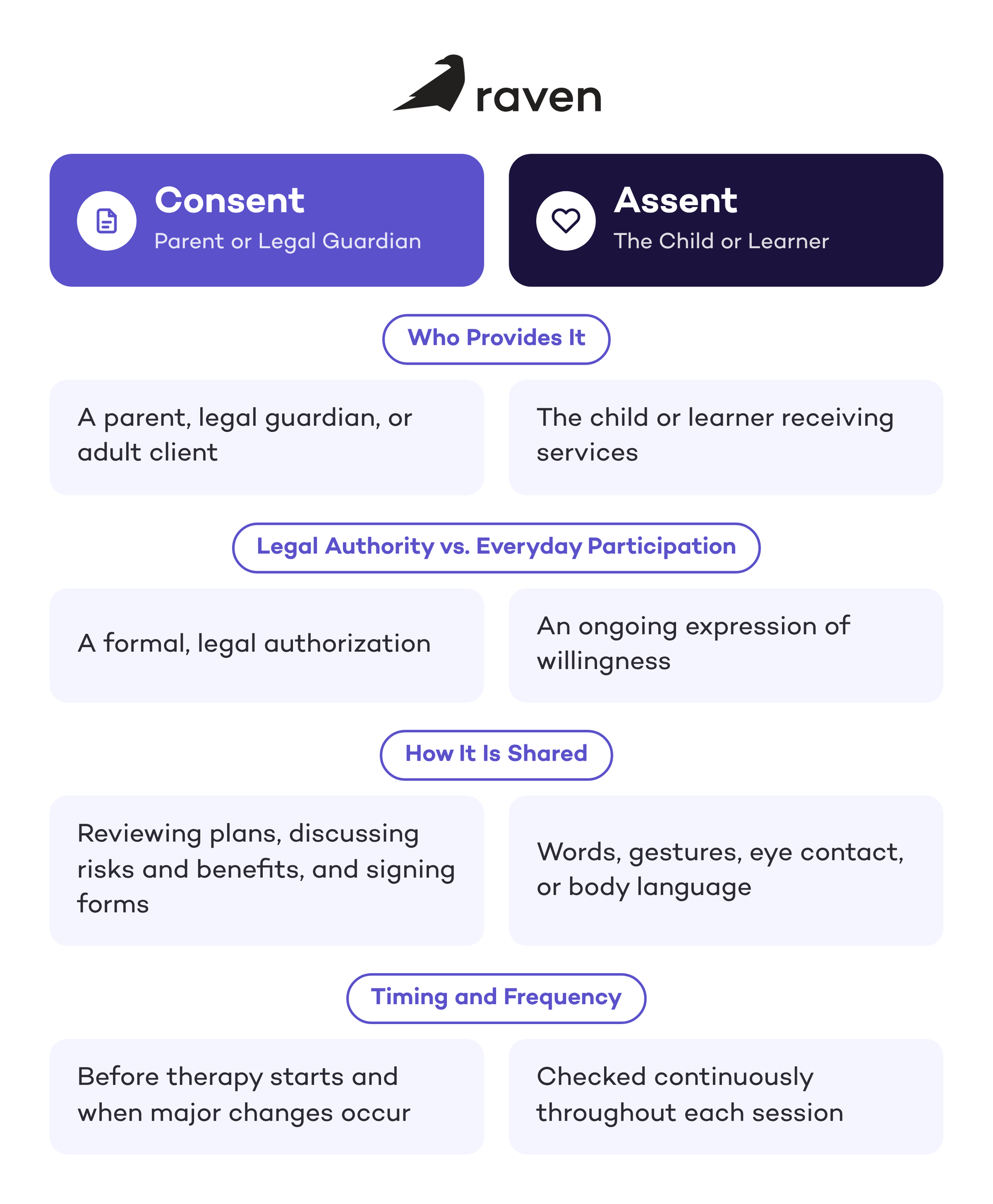
Who Provides It
Informed consent is given by a parent, legal guardian, or adult client who holds the legal right to make medical and educational decisions. Assent is given directly by the child or learner receiving the services.
Legal Authority vs. Everyday Participation
Consent is a formal, legal authorization required before an assessment or treatment plan can begin. Assent is an ongoing, everyday expression of willingness during actual play and teaching moments.
How It Is Shared
Consent involves reviewing written treatment plans, discussing potential risks and benefits, asking questions, and signing official forms. Assent is communicated naturally through spoken words, gestures, eye contact, or body language.
Timing and Frequency
Consent is obtained before therapy starts and updated whenever major changes are made to a treatment plan. Assent must be checked continuously throughout each session.
Having a parent's signed consent form gives a clinic permission to offer services, but it never gives a therapist permission to ignore a child's distress. Both consent and assent must be present for therapy to remain ethical.
How Do ABA Therapists Recognize Assent and Withdrawal of Assent?
Many children receiving ABA services are nonspeaking or still developing their communication skills, so therapists cannot rely solely on a child saying "yes" or "no." Every learner expresses comfort and discomfort in their own way.
Because of this, clinical teams work closely with parents to learn each child's unique signals right from the beginning.
Signs of Assent (Willing Participation)
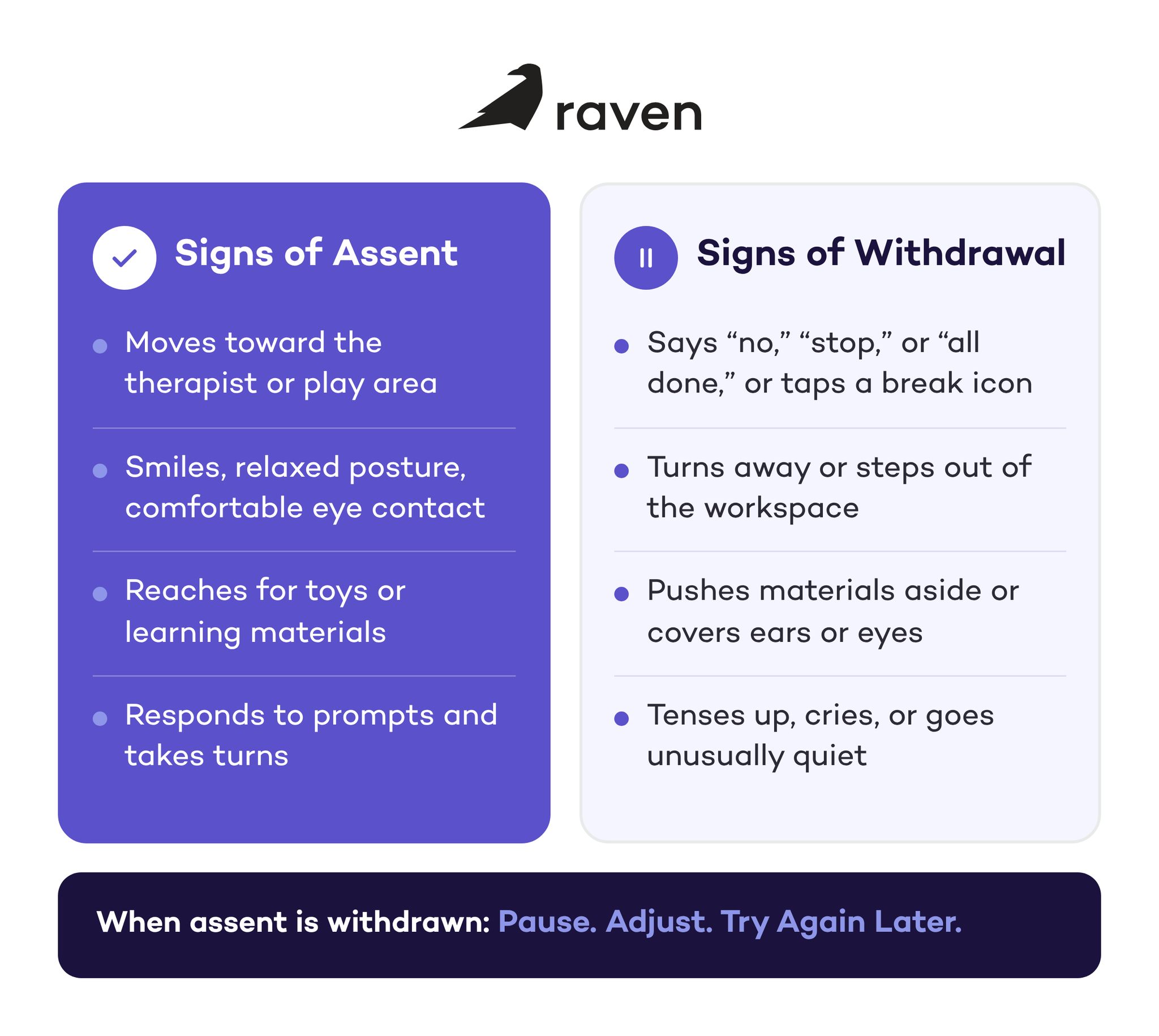
Walking toward the therapist, table, or play area on their own.
Smiling, making comfortable eye contact, or keeping a relaxed posture.
Reaching for toys, books, or learning materials offered by the therapist.
Responding to prompts, taking turns, or engaging in back-and-forth play.
Signs of Assent Withdrawal (Discomfort or Refusal)
Saying "no," "stop," "all done," or selecting a "break" icon on a communication device.
Turning their body away, pulling their hands back, or stepping out of the workspace.
Pushing materials aside, covering their ears or eyes, or putting their head down.
Sudden shifts in mood or posture, such as tensing up, frowning, crying, or going unusually quiet.
Recognizing subtle signs early is key. When a therapist notices a child pulling back or looking overwhelmed, they can respond right away before discomfort escalates into a meltdown.
How Is Assent Incorporated into ABA Therapy?
Putting assent into practice takes thoughtful planning and flexibility during sessions. Rather than sticking rigidly to a checklist of targets, therapists adjust their approach around the learner's real-time engagement.
Creating Individualized Assent Profiles
During initial assessments, the supervising Board Certified Behavior Analyst (BCBA) interviews caregivers and observes the child to write down what assent and assent withdrawal look like for that specific learner. Everyone on the care team follows the same guide, and keeping it in the clinic's data collection software puts it in front of every therapist before a session.
Honoring Refusal Promptly
When a child withdraws assent during a regular learning activity, the therapist pauses the request immediately. Stepping back shows the child that their communication works and that they do not need to scream or hit to be heard.
Adjusting the Activity or Environment
After pausing, the therapist reflects on why the child opted out. Was the task too difficult? Was the room too loud or bright? Did the activity go on too long? The therapist can then lower the difficulty, switch to a more engaging game, or take a short sensory break before trying again later.
Offering Meaningful Choices
Giving learners regular control over small decisions keeps sessions collaborative. Letting a child choose which task to tackle first, pick their favorite marker color, or decide whether to work on the floor or at a desk boosts motivation and voluntary participation.
Teaching Functional Communication
If a child expresses discomfort by pushing materials away or crying, therapists teach simple, low-effort ways to ask for a break, request help, or ask for a different activity.
Balancing Assent with Essential Safety
Respecting assent does not mean ignoring health or safety. If a child tries to run into a parking lot, reach for a hot stove, or refuse necessary medical care, a therapist will calmly step in to keep them safe. Even in those moments, the team still offers choices and comfort wherever possible to minimize distress.
Conclusion
Centering assent transforms ABA therapy into a respectful partnership where a child's feelings carry real weight. When therapists pay close attention to both spoken words and quiet body language, honor boundaries without pushback, and shape sessions around genuine engagement, children build lasting trust in the adults supporting them.
Over time, that respect does far more than improve session data. It helps learners grow into confident self-advocates who know their voice matters.
Sources:
https://pmc.ncbi.nlm.nih.gov/articles/PMC9897747/
https://goldencaretherapy.com/what-is-assent-based-aba-therapy-and-why-does-it-matter/
https://childwiseaba.com/understanding-assent-in-aba-therapy/
https://centriahealthcare.com/resources/the-effect-of-assent-based-care-in-aba-therapy/
https://passthebigabaexam.com/dana-dos-cracking-the-ethics-code-on-consent-vs-assent/
https://bacb.com/wp-content/ethics-code-for-behavior-analysts/
https://asatonline.org/research-treatment/clinical-corner/what-is-assent-in-aba-intervention/