Growing an autism therapy clinic is a balancing act. On one side, you have families waiting for life-changing behavioral interventions.
On the other side, you are running a complex healthcare business with tight margins and strict regulations. It is tempting to accept every new family that calls your office.
However, growing too quickly without the right foundation will break your internal systems. When back-office workflows collapse, your staff burns out, and the children in your care feel it most.
Scaling your business successfully means preparing your internal operations to handle a heavier load before you actually add that load.
Here is a practical look at how to expand your footprint while keeping your clinical standards high.
Signs Your ABA Practice Is Ready to Scale
Deciding to grow should never be a gut feeling. It needs to be backed by hard evidence that your clinic is stable enough to handle the extra weight. If you are currently struggling to make payroll every two weeks, adding more staff and taking on a larger office lease will only sink you faster.
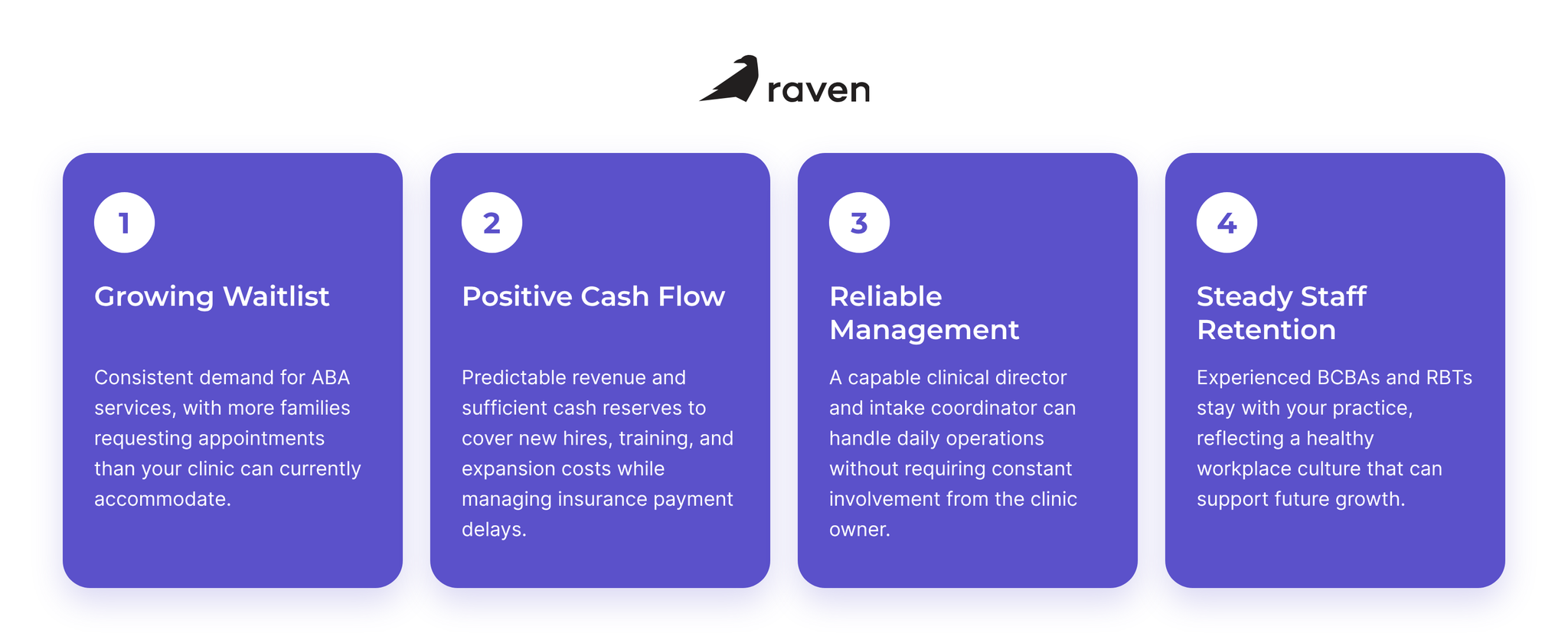
You know you are ready to take the next step when you see these specific green lights:
Your Waitlist Is Turning Away Good Fits
Having a waitlist is normal. Having a waitlist so long that families give up and go elsewhere means you have validated demand you are not meeting.
Your Cash Flow Is Predictably Positive
You are no longer holding your breath waiting for insurance checks to clear just to pay your technicians. You have a solid cash reserve built up to cover the initial costs of hiring and training new staff before their first billable sessions hit the bank.
You Are Not Micromanaging the Floor
If the clinic falls apart the second you take a vacation, you cannot scale. You need a trusted layer of middle management, like a strong clinical director and a highly organized intake coordinator who can run day-to-day operations without you in the building.
Staff Retention Is Steady
Turnover in behavioral health is naturally high. But if your core team of Board Certified Behavior Analysts (BCBAs) and technicians have stuck around for the long haul, it proves you have built a healthy workplace culture that can absorb new hires.
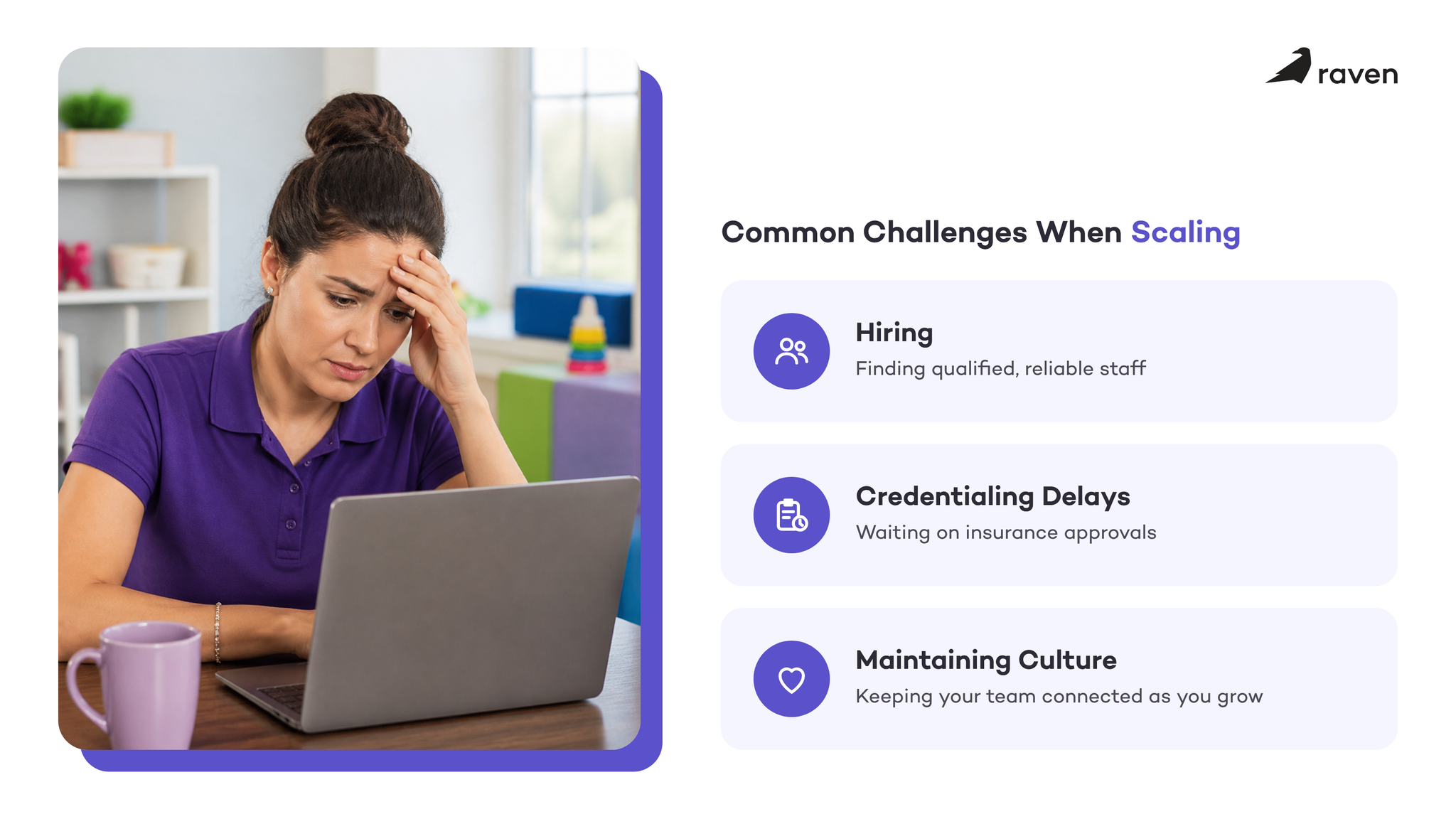
Common Challenges When Scaling an ABA Practice
Even with the best preparation, growing a healthcare business comes with serious growing pains. Clinic owners usually hit the same few roadblocks when they try to double their client list.
The biggest hurdle is always hiring. You cannot just pull anyone off the street to do this job. Finding reliable Registered Behavior Technicians (RBTs) who can handle the physical and emotional demands of the job is difficult. Once you find them, you also need enough BCBAs to provide the ongoing supervision the BACB requires, which is at least 5% of each RBT's service hours every month.
Then comes the credentialing trap. Say you hire a fantastic new BCBA. You cannot put them to work the next day. You have to submit their credentials to each of your insurance payers and wait for approval to clear.
This process often takes three to four months. During that window, you are paying their salary, but they cannot bill insurance for their time. This creates a cash flow gap that catches many clinic owners off guard. Starting credentialing early and keeping a close eye on your revenue cycle, whether you bill in-house or use managed billing services, helps keep that gap small.
Lastly, maintaining your company culture gets much harder. When you have ten employees, everyone feels like family. When you scale to fifty or a hundred employees spread across different regions or working exclusively in-home, people start feeling disconnected.
How ABA Software Supports Practice Growth
Trying to double your client roster using paper files, generic spreadsheets, and sticky notes rarely ends well. Human error increases as your volume increases. This is where a dedicated practice management platform becomes your safety net.
Good software automates the tedious administrative tasks that normally eat up your front office's entire day.
Reliable Authorization Tracking
When you have a hundred clients, no one can manually track every insurance expiration date. Good software can flag or block a session before a child's authorized hours run out, so you are not accidentally providing unbillable therapy.
Smarter Scheduling
If a technician calls out sick at 7 AM, specialized software allows you to instantly see which other technicians have the right skill level, are available at that exact time, and are geographically close enough to cover the home session.
Streamlined Data Collection
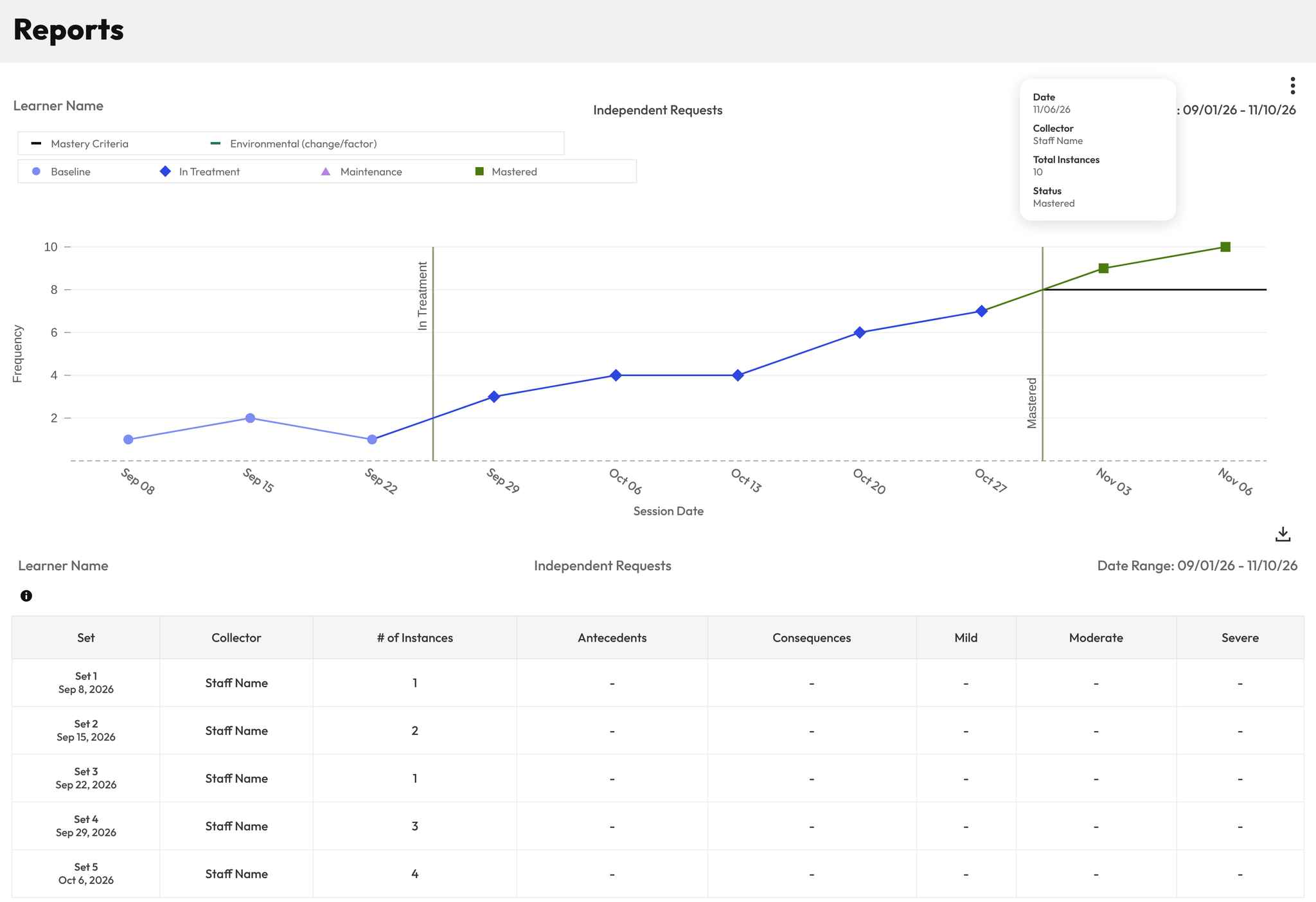
By using ABA data collection software, technicians can record behavioral data on tablets that automatically sync to the cloud. This allows BCBAs to monitor client progress graphs in real time from anywhere, making supervision more efficient without having to chase down lost paper data sheets.
How to Scale Without Compromising Quality of Care
The biggest fear many clinic owners have is that as the business grows, the quality of therapy will slip. It is a valid fear. If you chase billable hours without protecting your clinical staff, quality of care drops fast.
To scale safely, you have to protect your BCBAs' caseloads. If you push a supervisor to take on twenty-five high-needs clients just to boost revenue, they will cut corners.
They will rush session notes, skip parent training, and burn out quickly. Set a clear cap on how many cases a single analyst can manage, using the CASP ABA Practice Guidelines as a reference point, and hold to it, even when a family is eager for a spot.
You also need to standardize your training protocols. When you hire ten new technicians in a month, they all need to learn the same way to respond to challenging behavior, collect data, and write session notes.
Build a paid training program that goes beyond the basic certification requirements. Give your staff hands-on coaching and overlap time with senior therapists before they work alone in the field.
Finally, track clinical outcomes as closely as you track your finances. Use your software to monitor how quickly learners are mastering their goals.
If revenue is going up but client progress is stalling, hit the brakes and fix your clinical oversight before growing any further.
Conclusion
Scaling an ABA clinic is a marathon, not a sprint. It requires a close look at your current back-office workflows, a healthy financial runway, and a real commitment to protecting your staff from burnout.
By using smart software to handle the heavy administrative lifting and setting firm boundaries around caseload sizes, you can expand your reach safely.
When your operations run smoothly in the background, your team can focus on what they do best: delivering life-changing therapy to more families in your community. To see how Raven Health supports practices at every stage, from a single clinic to multiple locations, schedule a demo.
Sources:
https://centralreach.com/blog/scaling-your-startup-aba-practice-in-the-new-year/
https://caretap.net/blog/how-scale-aba-practice-without-chaos/
https://www.theralytics.net/blogs/how-to-achieve-aba-therapy-practice-growth